When sourcing packaging for a skincare, cosmetics, or beauty brand, the terms cosmetic packaging manufacturer and packaging supplier are often used interchangeably. However, they can represent very different business models, especially when a brand needs custom bottle shapes, private molds, decoration, coordinated components, or large-scale production.
The simplest difference is this: a cosmetic packaging manufacturer is directly involved in developing and producing packaging, while a packaging supplier may primarily source finished products from manufacturers and supply them to customers. A manufacturer can therefore be more involved in product development, production engineering, quality control, and customization.
Quick answer: If you need standard packaging that is already available, a supplier may be sufficient. If you need custom glass bottles, new molds, OEM/ODM development, special finishes, coordinated pumps and caps, or long-term production support, working directly with a manufacturer can provide a more integrated packaging development process.
What Is a Cosmetic Packaging Manufacturer?
A cosmetic packaging manufacturer is a company that participates directly in the development and production of packaging. Depending on its capabilities, this may include material selection, structural design, mold development, prototyping, glass forming, surface decoration, component assembly, quality inspection, and mass production.
For example, LISSON describes its business as covering R&D, production and processing of cosmetic, beauty, and personal packaging. Its website also presents OEM and ODM services, custom bottle development, decoration, and turnkey packaging solutions for beauty brands.
For brands looking for a broader development process rather than simply purchasing existing containers, the company's custom glass packaging solutions provide a useful example of how manufacturer-led packaging development can work.
What Is a Cosmetic Packaging Supplier?
A cosmetic packaging supplier is generally focused on supplying packaging products to brands, distributors, manufacturers, or other buyers. The supplier may keep inventory, coordinate orders, source products from different factories, or provide access to a broad selection of ready-made packaging.
A supplier does not necessarily manufacture every product it sells. In many cases, its value comes from product selection, purchasing coordination, logistics, customer service, and access to multiple packaging options.
This model can work well when a brand needs standard packaging quickly and does not require significant structural changes. However, the supply chain may involve an additional layer between the buyer and the actual factory.
Cosmetic Packaging Manufacturer vs. Supplier: What Is the Difference?
The difference becomes clearer when the two models are compared across the areas that matter most during cosmetic packaging development.
| Factor | Manufacturer | Supplier |
|---|---|---|
| Production | Directly involved in manufacturing | May source products from factories |
| Custom molds | Typically able to support mold development | Depends on manufacturing partners |
| OEM/ODM | Often integrated into the development process | May coordinate OEM/ODM through factories |
| Quality control | Can control production quality closer to the source | Often relies partly on supplier or factory QC |
| Customization | Usually broader customization options | Usually focused on available products and finishes |
| Best suited for | Custom and long-term packaging projects | Standard or readily available packaging |
Why Does the Difference Matter for Cosmetic Brands?
Cosmetic packaging is more than a container. The bottle has to work with the formula, dispensing system, filling process, decoration requirements, shipping conditions, and overall brand design.
A skincare brand, for example, may need a 30ml serum bottle with a specific neck finish, a custom dropper, a frosted surface, a printed logo, and a particular color. A perfume brand may need a completely different bottle shape, heavy glass base, custom cap, and decorative finish.
In these situations, communication with the production side becomes increasingly important. A manufacturer can often discuss design feasibility and production requirements directly, while a supplier may need to confirm those details with another factory.
Customization Is One of the Biggest Differences
Customization is often the point where the difference between a manufacturer and a supplier becomes most noticeable.
Standard packaging can usually be selected from an existing catalog. Custom packaging requires additional decisions such as bottle geometry, capacity, wall thickness, neck dimensions, color, decoration, closures, and sometimes a completely new mold.
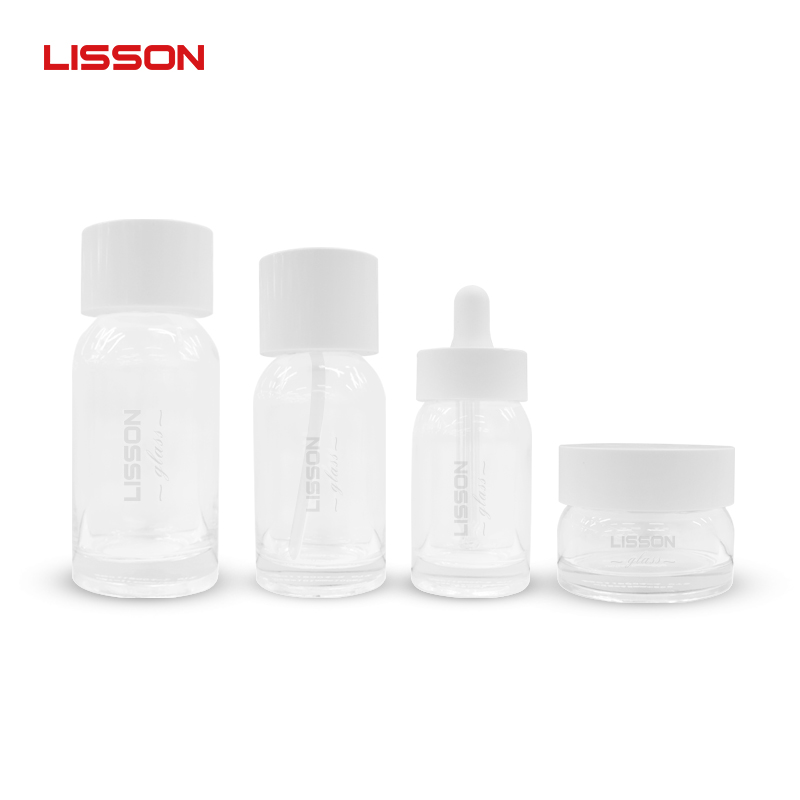
LISSON's customization service describes a development process that can include concept consultation, bottle selection, 3D and artwork development, mold and sampling, decoration, and production. This type of workflow is particularly relevant for brands developing packaging that needs to be different from standard catalog products.
For brands primarily interested in skincare packaging, the glass lotion bottle collection shows how different bottle structures and dispensing formats can be used across cosmetic applications.
How Manufacturers Support OEM and ODM Cosmetic Packaging
OEM and ODM are frequently discussed when beauty brands work with packaging manufacturers.
OEM generally means producing packaging according to a customer's specifications, branding, or design requirements. ODM generally involves using the manufacturer's design and development capabilities as part of the product development process.
In practice, a cosmetic packaging project can combine both approaches. A brand may select an existing bottle structure but request its own color, logo, surface treatment, and cap. Another brand may provide a completely new concept that requires structural development and sampling.
This is one reason it is useful to ask a packaging company not only whether it can provide a product, but also what parts of the product development process it controls directly.
The Role of Glass Bottle Manufacturing in Cosmetic Packaging
For glass cosmetic packaging, manufacturing capability can influence the available shapes, thicknesses, finishes, capacities, and decoration methods.
LISSON's product range includes skincare bottles, dropper bottles, perfume bottles, cosmetic bottle sets, and other glass packaging formats. Its website also describes integrated capabilities covering glass bottle manufacturing, caps and pumps, and external finishing processes.
For concentrated serums, essential oils, and other liquid formulations where controlled dispensing is important, brands can also explore glass dropper bottles designed for precise dosage applications.
Quality Control Can Be Easier to Trace With a Manufacturer
Quality control is another important consideration when choosing a cosmetic packaging partner.
With a manufacturer, the buyer can potentially trace quality requirements closer to the production process. This can be especially useful for projects involving glass wall thickness, dimensional tolerances, pump compatibility, color consistency, printing, frosting, hot stamping, or other surface treatments.
This does not mean that every manufacturer automatically provides better quality than every supplier. The practical question is how clearly the company can explain its inspection process, sampling standards, production controls, and corrective procedures when a problem occurs.
Which Option Is More Suitable for Different Packaging Projects?
There is no single sourcing model for every cosmetic brand. The appropriate choice depends on the stage of the project and the level of customization required.
Choose a packaging supplier when:
- You need standard bottles or jars already available in the market.
- You are testing a new product with relatively simple packaging requirements.
- You do not need a new bottle mold.
- Your main priority is product sourcing and purchasing coordination.
Consider working directly with a manufacturer when:
- You need a custom bottle shape or structure.
- You need custom molds or prototypes.
- You require OEM or ODM packaging development.
- You need coordinated bottles, jars, pumps, caps, and decoration.
- You expect recurring large-volume production.
- You want a long-term packaging development partner.
Why a Complete Cosmetic Packaging Set Can Be Useful
For brands launching several products at the same time, buying individual packaging components from different sources can create inconsistencies in color, proportions, finish, and visual identity.
A coordinated bottle-and-jar system can help create a more consistent appearance across serums, lotions, toners, creams, and other skincare products.
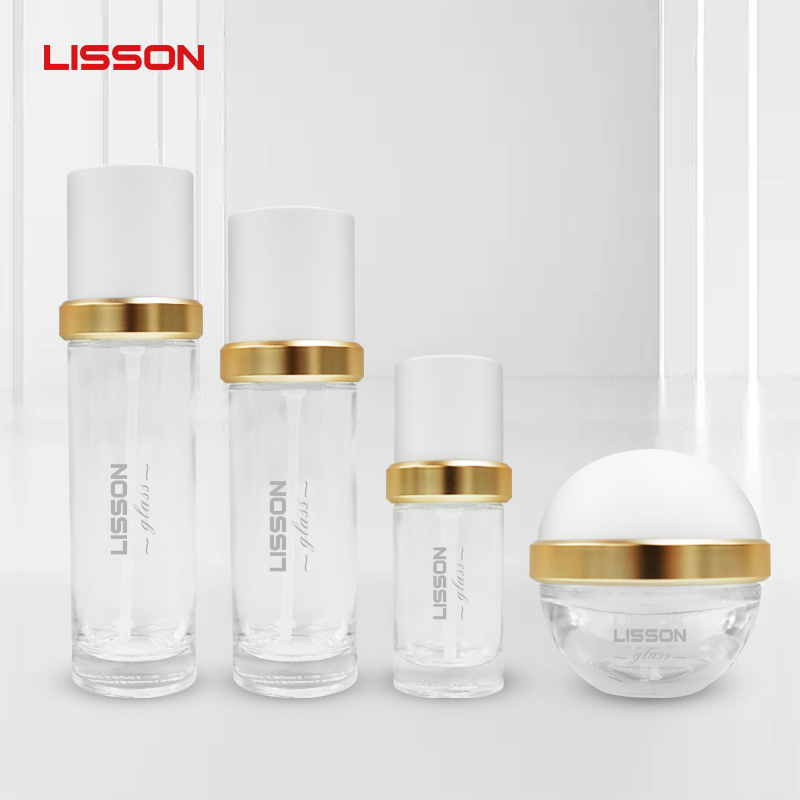
LISSON offers several coordinated glass packaging collections. One example is its luxury clear glass cosmetic bottle and jar packaging set , which combines different bottle formats and a cream jar within one visual system.
What Should You Ask a Cosmetic Packaging Company Before Ordering?
Instead of asking only for a product catalog and price, brands can ask a few questions that quickly reveal whether they are dealing with a manufacturer or primarily a sourcing supplier.
- Do you manufacture the glass bottles directly?
- Can you develop a new bottle mold?
- Can you provide OEM and ODM services?
- Where are sampling and mass production performed?
- What customization options are available?
- Can the bottle, pump, cap, and decoration be developed as one packaging system?
- What quality inspections are performed before shipment?
- What are the MOQ and lead time for standard and customized products?
- Can you provide samples before mass production?
- How is formula and packaging compatibility evaluated?
These questions help move the discussion from simply comparing unit prices to understanding the complete packaging development process.
How Does LISSON Fit Into the Manufacturer vs. Supplier Difference?
LISSON positions itself around custom glass cosmetic packaging manufacturing rather than only supplying ready-made containers. Its website describes capabilities covering product development, OEM/ODM, custom design, glass bottle production, decoration, and packaging solutions.
Its skincare packaging range includes coordinated bottles and jars for different formulations and product categories. For brands that need a broader collection rather than a single container, the cosmetic glass bottle set collection is particularly relevant.
The company's website also states that it serves beauty brands across North America, Europe, and Asia and provides turnkey glass packaging solutions. For a brand evaluating potential manufacturing partners, these capabilities can be considered alongside MOQ, product requirements, quality standards, sampling, and delivery expectations.
Frequently Asked Questions
Is a cosmetic packaging manufacturer the same as a packaging supplier?
Not necessarily. A manufacturer is directly involved in producing packaging, while a supplier may source packaging from one or more manufacturers. Some companies can operate in both roles.
Is a manufacturer always cheaper than a supplier?
Not always. Pricing depends on material, design, order volume, mold costs, decoration, components, logistics, and other project requirements. A supplier may also be competitive for standard products.
Can a cosmetic packaging manufacturer create custom bottle molds?
Many manufacturers can support custom mold development, but capabilities vary by company. Brands should confirm whether mold design, prototyping, sampling, and mass production are handled within the company's own production system or through external partners.
What is better for a private label skincare brand?
It depends on the project. Standard private label products may work well with ready-made packaging, while brands developing a distinctive visual identity may benefit from a manufacturer that can support custom shapes, finishes, closures, and coordinated packaging.
Can one company provide bottles, jars, pumps, and caps?
Some cosmetic packaging manufacturers provide integrated packaging solutions that combine containers with dispensing and closure components. Buyers should confirm exactly which components are manufactured in-house and which are sourced from partners.
What is the main difference between OEM and ODM cosmetic packaging?
OEM generally means producing packaging according to the customer's specifications, while ODM generally involves greater participation from the manufacturer in design and development. A project can use elements of both approaches.
Why should brands test cosmetic packaging before mass production?
Packaging needs to work with the formula, closure, dispensing system, filling process, and intended shipping conditions. Sample testing can help identify compatibility, sealing, dimensional, or functional issues before a large production run.
Final Takeaway
The difference between a cosmetic packaging manufacturer and a packaging supplier mainly comes down to how directly the company participates in packaging development and production.
A supplier can be a practical option for standard, readily available packaging. A manufacturer becomes particularly relevant when a project involves custom bottle designs, mold development, OEM/ODM services, decoration, component matching, quality control, and long-term production.
For beauty brands evaluating packaging partners, the most useful question is therefore not simply "Are you a manufacturer or supplier?" A better question is: Which parts of my cosmetic packaging project can you design, manufacture, customize, test, and control directly?
That answer can provide a much clearer picture of whether the company is equipped to support a simple packaging purchase or a complete custom cosmetic packaging project.